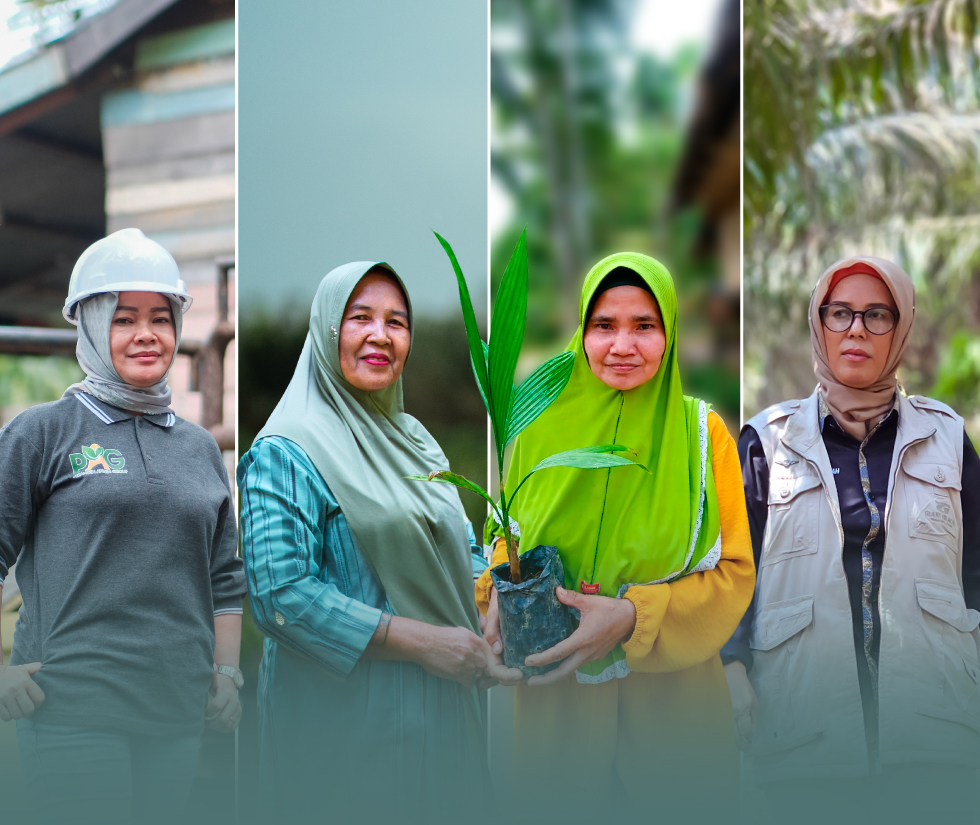
Oil palms are more than just a source of cooking oil — nearly every part of the fruit and tree can be reused.
Materials such as Empty Fruit Bunches (EFB), fibre, shells, Palm Oil Mill Effluent (POME), and leaves are transformed into fertiliser, bioenergy, animal feed, and other useful products.
Through a zero-waste approach, palm oil production can reduce waste, create additional value, and support a more sustainable agricultural system.
You probably use products made from palm oil every day. But how well do you really know where it comes from? Which part becomes the oil? What happens to the fruit, or even the tree once the fruit is harvested?
Do you think only the oil has value? Explore the many parts of oil palms and discover how zero waste gives every part, from the fruit to the tree, a valuable second life.
Every part of the palm oil tree, from its fruit to its leaves, has a purpose. By unlocking the value in every part, we can reduce waste, create new possibilities, and build a more sustainable future.
Zero waste is about making the most of every resource — from renewable energy and organic fertiliser to animal feed and other useful products. These results in a more sustainable and efficient farming system that benefits both people and the environment.
Take a closer look on how we ensure zero-waste is also applied in our production phase here!
Fresh Fruit Bunches (FFB)
Fresh Fruit Bunches (FFB) are harvested at optimum ripeness, when loose fruits begin to detach naturally. To preserve Crude Palm Oil (CPO) quality, the fruit must be processed within 24 hours, as bruising during harvesting and transport can increase Free Fatty Acid (FFA) levels, reducing both oil yield and quality. The sooner the fruit is processed, the less FFA develops, helping preserve both the yield and quality of the crude palm oil.
Once the palm fruits have been separated from the bunch, what remains is known as the Empty Fruit Bunch (EFB). Rich in cellulose and lignin, EFB is a renewable resource with wide potential across bioenergy, agriculture, and manufacturing. At plantations, it is commonly composted or applied as mulch to enrich the soil, improve moisture retention, and support healthier crop growth.
The mesocarp or fruit’s flesh from FFB is pressed to produce Crude Palm Oil (CPO), while the kernel at the centre of the fruit is processed into Palm Kernel Oil (PKO). Together, these two oils are used in a wide range of everyday products, from cooking oil to soaps and detergents.
Fibre is the fibrous pulp left behind after Crude Palm Oil (CPO) is extracted from the mesocarp, making up about 14-15% of the fruit’s weight. Rather than being discarded, it is commonly reused as biomass fuel to help generate steam and power mill operations.
At the centre of the fruit lies the palm kernel. Palm Kernel Oil (PKO) comes from kernels that are pressed using a screw press, leaving behind Palm Kernel Expeller (PKE).
Palm Kernel Expeller (PKE) comes in the form of brown to reddish-brown granules or chunks. With its combination of protein, residual oil and fibre, PKE is widely used as a feed ingredient for livestock, particularly ruminants such as cattle, goats and sheep.
Rather than being discarded after the milling process, it is collected and reused as boiler fuel to help generate steam and power mill operations.
Palm oil trees
Palm oil trees that have reached the end of their productive life can even be repurposed into furniture! Different parts of the tree are also transformed into bioenergy, construction materials, and agricultural products, ensuring the tree continues to provide value beyond its harvest years.
Leaves and fronds are pruned from the palm oil tree during harvesting.
Instead of being discarded, they are commonly returned to the plantation as mulch and natural fertiliser to enrich the soil. They can also be transformed into woven handicrafts, cattle feed, as well as particleboard.
Pruned midribs are laid on the ground during replanting, where they decompose into organic fertiliser and help retain soil moisture. Their value doesn’t end there. Pruned midrib can also be repurposed as livestock feed, renewable bioenergy, and raw materials for commercial products.
Palm Oil Mill Effluent (POME)
Palm Oil Mill Effluent (POME) is the wastewater generated during the extraction of Crude Palm Oil (CPO). Before being reused, POME is treated to reduce its acidity and lower its Biochemical Oxygen Demand (BOD)[1] and Chemical Oxygen Demand (COD)[2].


 Our Shared Values
 Our Business
 Our Foundations
 Our Achievements
 Our Governance
 Conservation Management & Monitoring
 Climate Change
 Community Engagement
 Partnerships & Memberships
 Human Rights & Labour
 Responsible Sourcing
 Responsible Production
 Certifications
 Sustainability Report
 Palm-based Food Products
 Other Food Products
 Oleochemicals
 Bioenergy
 Food & Nutrition Innovation
 Press Releases
 Stories
 Meet Our Experts
 In the News
 Publication
 Shareholder Information
 Disclosure of Information
 Financial Information
 Prospective Suppliers
 Support for Palm Suppliers
 FAQ
FAQ Existing Non-Palm Suppliers
 Graduates & Professionals
 Scholarships
 Internships